In this article
Shops, schools, startups and social media pages all need design work every week. Good design is less about talent than about learning the rules and practising them.
Learn the fundamentals
- Layout and spacing: give every element room and align things to a clear grid.
- Typography: use one or two typefaces, with clear sizes for headings and body text.
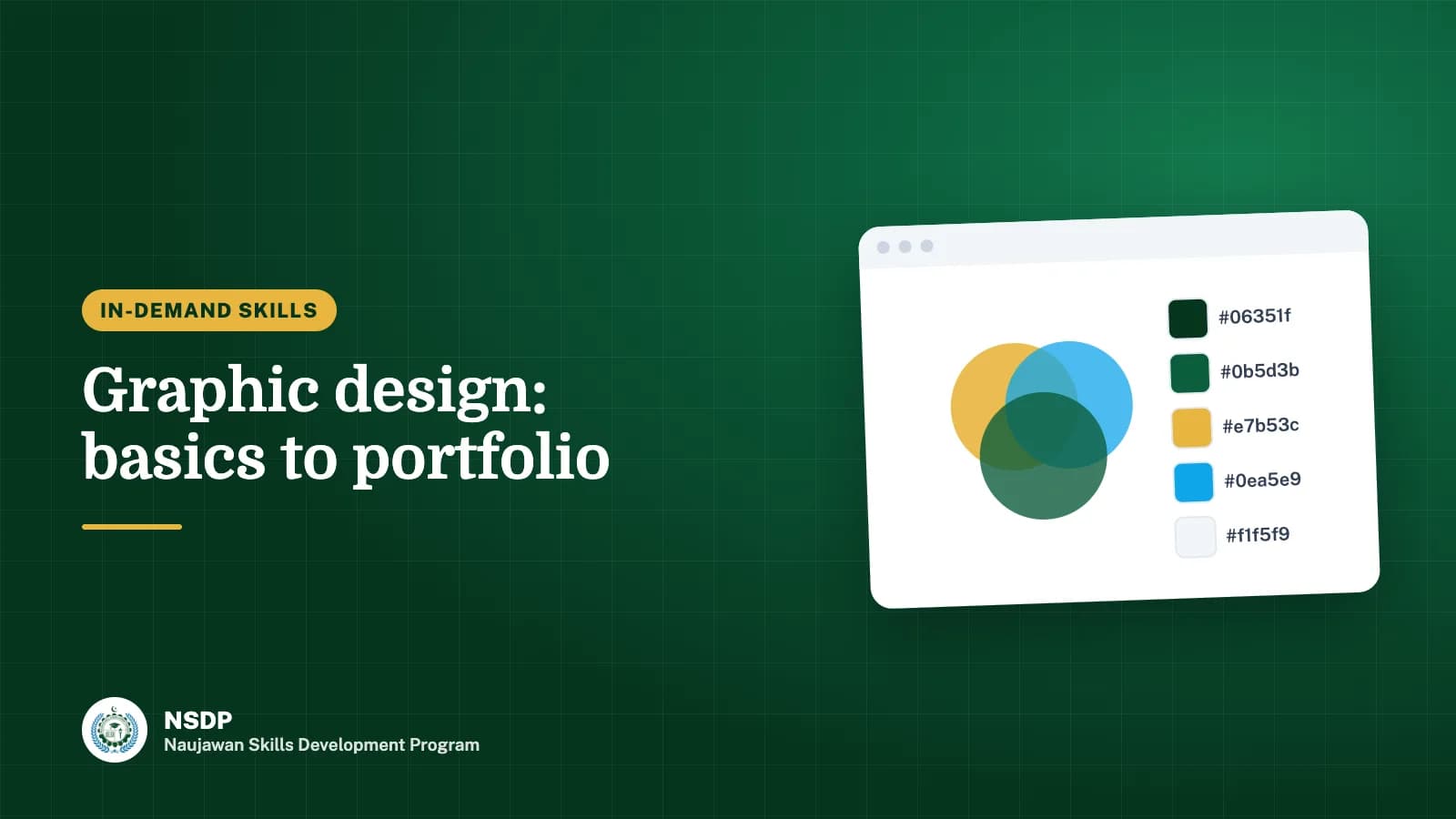
- Colour: start with a small palette and check that text is easy to read on its background.
- Hierarchy: the most important message should be the first thing people see.
Choose your tools
Industry-standard tools include Adobe Photoshop and Illustrator, and Figma for screens and interfaces. Browser-based tools such as Canva are useful for quick social posts. Learn one professional tool properly rather than several briefly.
Practise with briefs
Write yourself a brief as a client would: who the business is, who its customers are and what the design must achieve. Then design to that brief. Examples:
- A logo and colour palette for a new bakery.
- A set of five social media posts announcing a sale.
- A one-page flyer for a school admission campaign.
Build your portfolio
Show six to eight of your best pieces. For each, add two or three lines: the brief, the idea behind your solution and the result. Clients hire designers who can explain their choices.
Get feedback
Share work with your instructor and classmates and ask what is unclear. Improving one design after feedback teaches more than making three new ones.
NSDP offers graphic design courses online and on campus, each with its monthly fee and length on the course page.
Questions and answers
Do I need to be good at drawing to learn graphic design?
No. Most graphic design work is about layout, type and colour. Drawing helps with illustration but is not required for logos, posts or flyers.